


VELUX Manual Venting Skylights for Light and Air
There are solutions that become part of the space and work with it. VELUX Manual Venting Skylights fall into this category. Overhead daylight and the ability to open the sash manually are two simple actions that define how this solution functions.
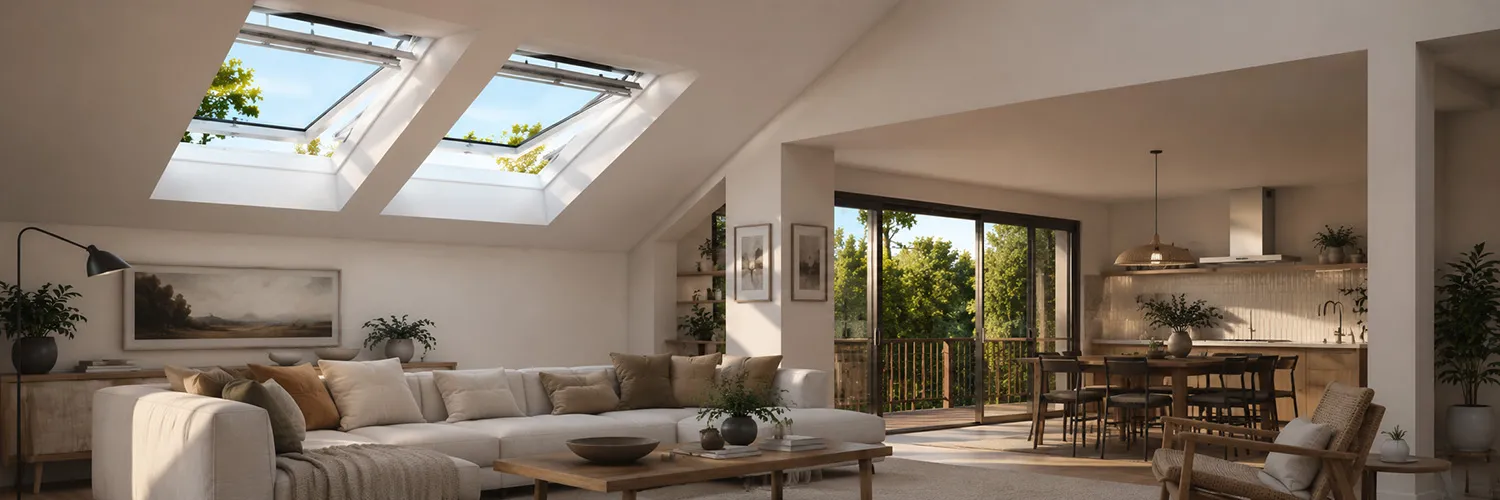
When a Space Loses Its Sense of Lightness
Even a well-designed space can sometimes feel enclosed. The proportions are balanced, the materials are carefully chosen, yet the interior still lacks daylight or fresh air. In Southern California, where bright natural light is part of everyday life, this can become particularly noticeable.
The challenge is most common in deeper parts of a floor plan, rooms with limited access to façade windows, and attic spaces where roof geometry restricts natural light. Daylight often reaches these areas unevenly, while fresh air can become trapped without additional ventilation.
Conventional windows bring light into a space in a focused way. Overhead light fills the room evenly without harsh contrasts. The room gains depth, and even smaller spaces feel more composed.
Fresh Air without Extra Effort
Manual fresh air skylights allow ventilation to be controlled manually. This quickly becomes a natural habit.
When the sash is opened, airflow moves from top to bottom, creating a vertical airflow inside the space. Warm air rises and exits, while cooler air enters.
Kitchens, stairwells, and upper floors often benefit the most, as warm air naturally accumulates in these areas. Opening the skylight quickly refreshes the space and improves overall air quality.
An Economy Shaped by Everyday Decisions
Throughout the day, the steady influx of natural light through overhead openings reduces the need for artificial lighting.
In the warmer season part of air exchange is maintained without mechanical systems. This reduces the load on equipment and simplifies the engineering side of the project.
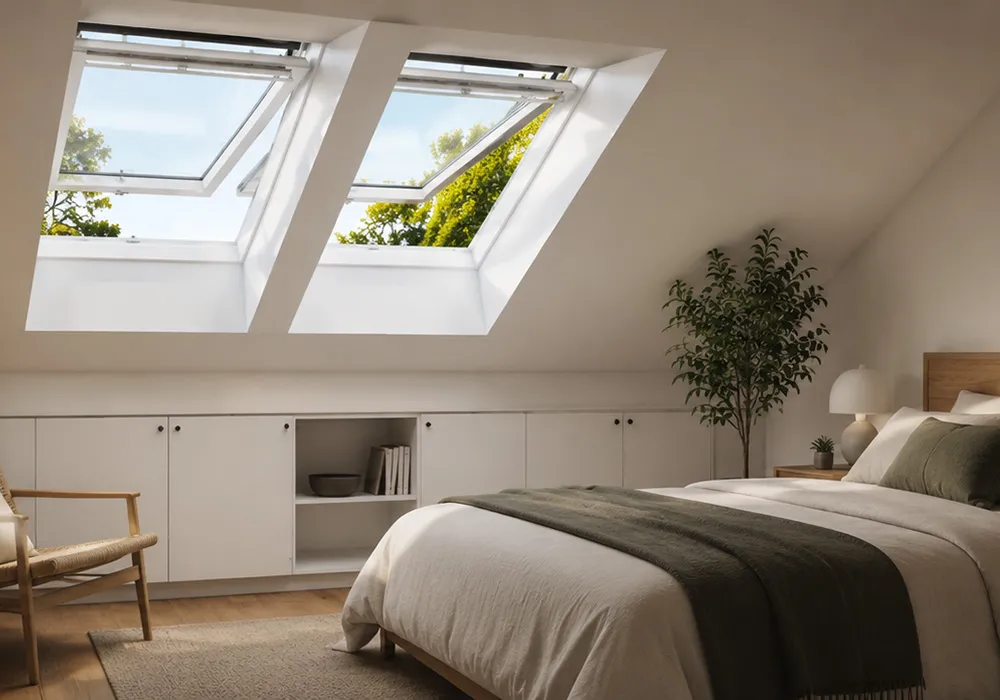
Where Manual Venting Skylights Work Best
These solutions work particularly well in finished attics, kitchen areas, bathrooms without facade access, stairwells, and compact commercial interiors.
In each case, the goal remains the same: to allow the space to work directly with air and light.
Control That Requires No Effort
The manual mechanism is one of the simplest solutions. Skylight with manual control opens and closes when it is needed, without reliance on external systems. If there is no direct access to the skylight, a control rod is used, maintaining ease of operation.
What to Consider When Selecting and Installing
Manual venting skylights are selected based on the roof structure and the specific space. Plan placement and access to the control in advance so they are convenient in everyday use.
The position of a skylight influences the amount of daylight entering the room and how it spreads throughout the space, so placement is best planned early in the design process. Compatible with a variety of roof types and pitches, manual venting skylights fit naturally into a wide range of architectural projects.
With fewer components and no reliance on electricity, manual venting skylights are easy to maintain and operate. Energy-efficient glazing with laminated safety glass adds durability and the protection required for overhead glazing.
Proper placement is just as important. Installation height, roof pitch, and access to opening skylights all affect everyday usability.