


New Vision for Industrial Spaces: The Role of Skylights
Industrial buildings were long designed with a focus on reliability and uninterrupted process performance. Lighting was artificial, spaces were kept as functional as possible, and the roof primarily served as protection from weather conditions.
Over time, this approach began to shift, and in production buildings more attention started to be given to interior spatial organization and natural light.
VELUX develops this direction through a range of solutions for commercial and industrial buildings, from modular systems to custom metal constructions. Each of them addresses one task, bringing daylight to spaces where it is not naturally present.
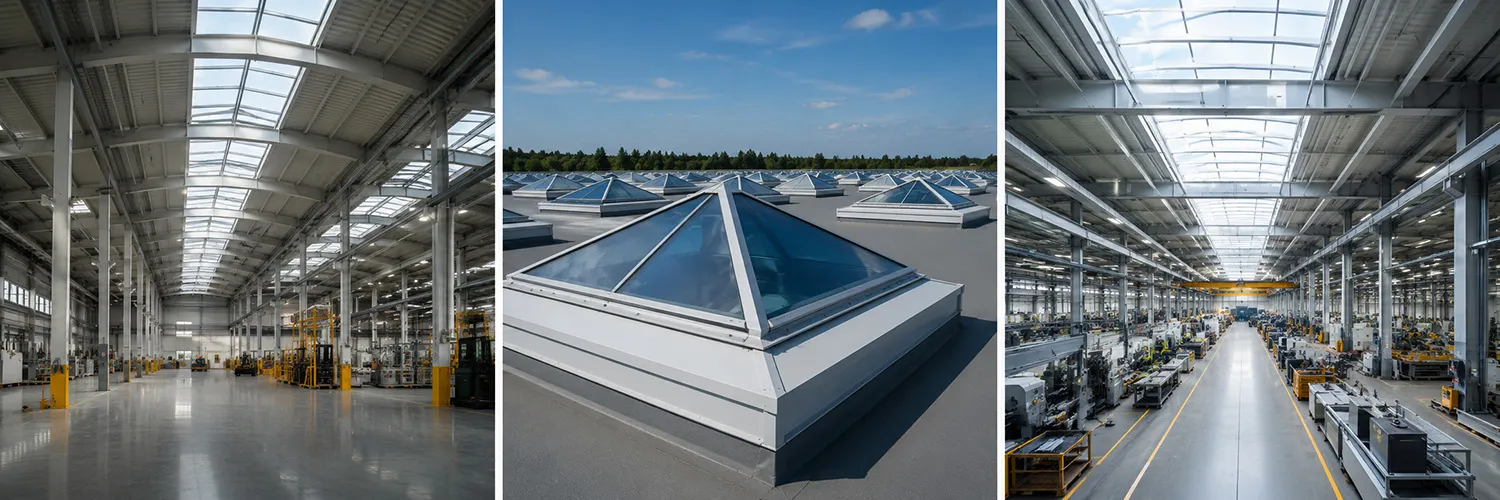
Role of Skylights in Industrial Buildings
Industrial buildings almost always operate with large spans, high process intensity, and constant movement of people and equipment. In such conditions, light becomes one of the key factors influencing productivity, quality, and precision of tasks performed.
When natural lighting is insufficient, reliance on artificial light increases, and along with it additional costs appear, from energy consumption to employee fatigue.
Daylight introduced through glass skylights helps redistribute the load and reduce the intensity of artificial lighting throughout the day.
Types of Skylights in Industrial Facilities
In industrial architecture, different types of lighting systems are used. This depends on the scale of the building, roof structure, and lighting requirements:
- VELUX Modular Skylights, modular overhead daylight systems for large commercial and industrial buildings, forming continuous light surfaces.
- VELUX commercial project solutions (custom roof skylights), individually designed lighting solutions for complex roof geometry and specific lighting requirements.
- VELUX modular / unit roof skylights, point-based daylight elements for warehouses and production spaces, providing localized daylight entry.
- VELUX large-scale daylighting solutions, engineering systems for creating extended daylight zones in large-scale buildings.
Technical Features
Modern skylights are designed to operate in industrial conditions, temperature fluctuations, high humidity, wind loads, and mechanical stress.
Their construction uses multi-layer glazing units, thermal breaks, and systems for protection against leakage and condensation.
In more complex projects, such systems may include ventilation and smoke extraction functions, which is especially important for large production facilities.
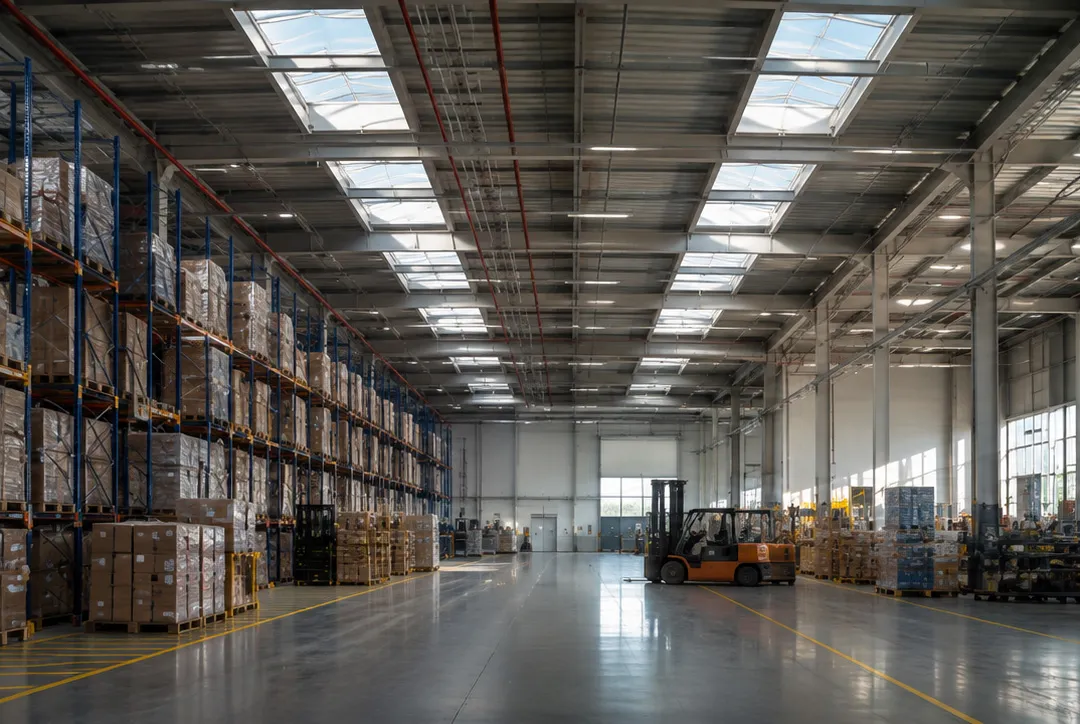
Questions about Skylights in Industrial Buildings
Below are the basic questions most often raised when working with skylights in industrial facilities.
Why Are Skylights Used in Industrial Buildings?
They provide natural lighting and reduce the need for artificial light during the day.
Where Are Skylights Usually Installed?
In production workshops, warehouses, logistics centers, anywhere where lighting of large areas is important.
Do They Affect How Spaces Function?
Yes. They change light distribution and, along with it, affect visibility and orientation inside the space.
Are They Difficult to Maintain?
Modern systems do not require complex maintenance. Regular inspections and basic surface cleaning are sufficient.