


Commercial & Industrial Skylight Systems in Los Angeles County
In commercial architecture in Los Angeles County, natural light has long been part of core design thinking. It affects how the space feels and how comfortable it is inside.
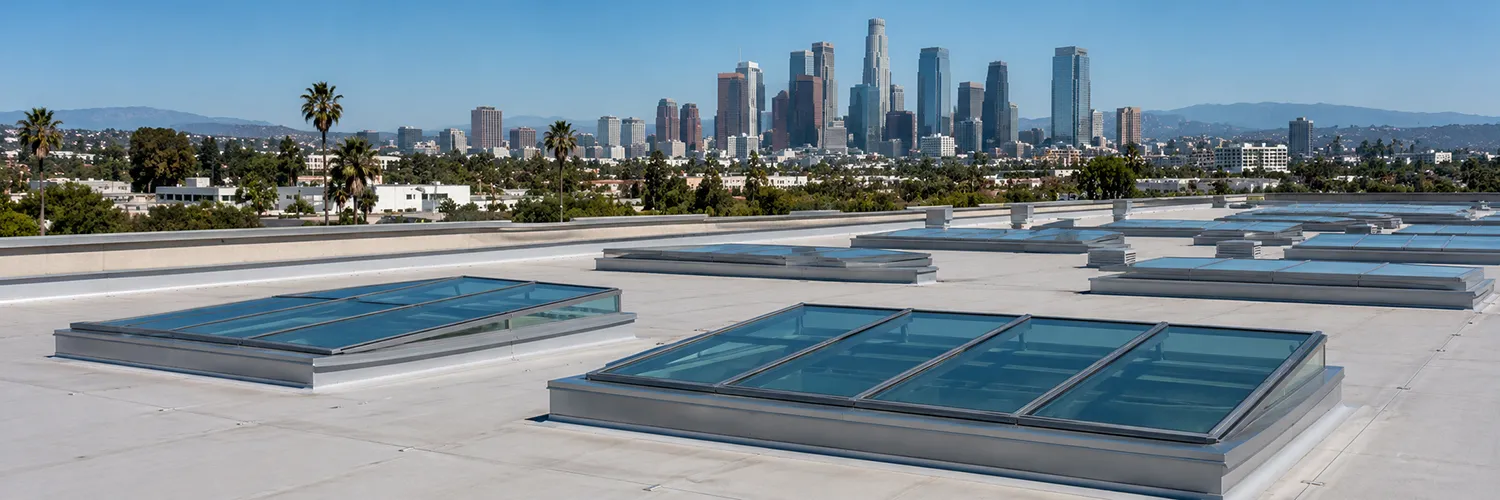
They are used both in new projects and in the renovation of existing homes. The choice is based on the goal of enhancing natural light in areas where traditional window openings are limited by architectural constraints, as well as reorganizing how light is distributed throughout the space.
In warehouses, factories, stores, and offices, VELUX skylight systems bring more natural light into large spaces, especially in buildings with high ceilings, where they improve visibility.
Solutions for Commercial and Industrial Facilities
VELUX commercial and industrial skylight solutions are designed based on how the building is used and its roof structure.
- Fixed skylights are used in spaces with constant lighting demand. These include warehouses, logistics centers, and office buildings where stable natural light is required throughout the day.
- Venting skylights are used in spaces that require natural ventilation. Such solutions are typical for production areas, technical rooms, and industrial facilities.
- Modular skylight systems are designed for large roof areas. They allow the creation of uniform daylight zones across wide spans.
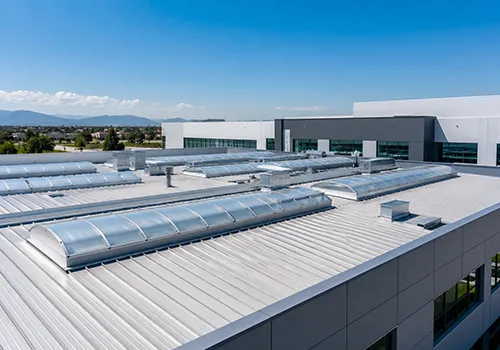
Design in Los Angeles County Conditions
Skylight system design starts with an analysis of the roof, building function, and regional climate conditions.
In Los Angeles County, solar exposure, wind loads, and energy efficiency requirements defined by California Title 24 are taken into account. These standards directly influence the selection of glazing units and the thermal performance characteristics of the system.
Special attention is given to the integration of skylights with building engineering systems, including HVAC, to ensure proper ventilation and climate control operation.
Durability and Operation
VELUX skylight systems are designed for commercial and industrial buildings. Their performance depends on how they are designed, installed, and integrated into the roof. When properly installed, these solutions maintain stable performance over many years of operation.
Factory engineered flashing and sealing solutions provide protection against moisture and resistance to the climate conditions typical of the Los Angeles County region.
We install Commercial & Industrial Skylight Systems in Los Angeles County, based on the structural features of buildings, design requirements, and architectural logic of each specific space.
The work is based on strict compliance with engineering standards and manufacturer specifications, which ensures stable performance of daylight systems and predictable long-term results.