


Why Do Skylights Leak? 5 Common Causes and Solutions
A residential skylight leak almost always appears at the worst possible time. Homeowners in Santa Monica, Torrance, and Malibu may not notice it until the water has reached the ceiling or the area around the skylight.
The skylight itself may be completely fine. Water can enter through damaged flashing, roofing, or the connection between the skylight and the roof, then travel underneath the roofing materials and appear inside the home somewhere else.
Below, we will look at five common causes of leaks and explain what should be checked in each case.
1. Why Can Damaged or Improperly Installed Flashing Cause a Leak?
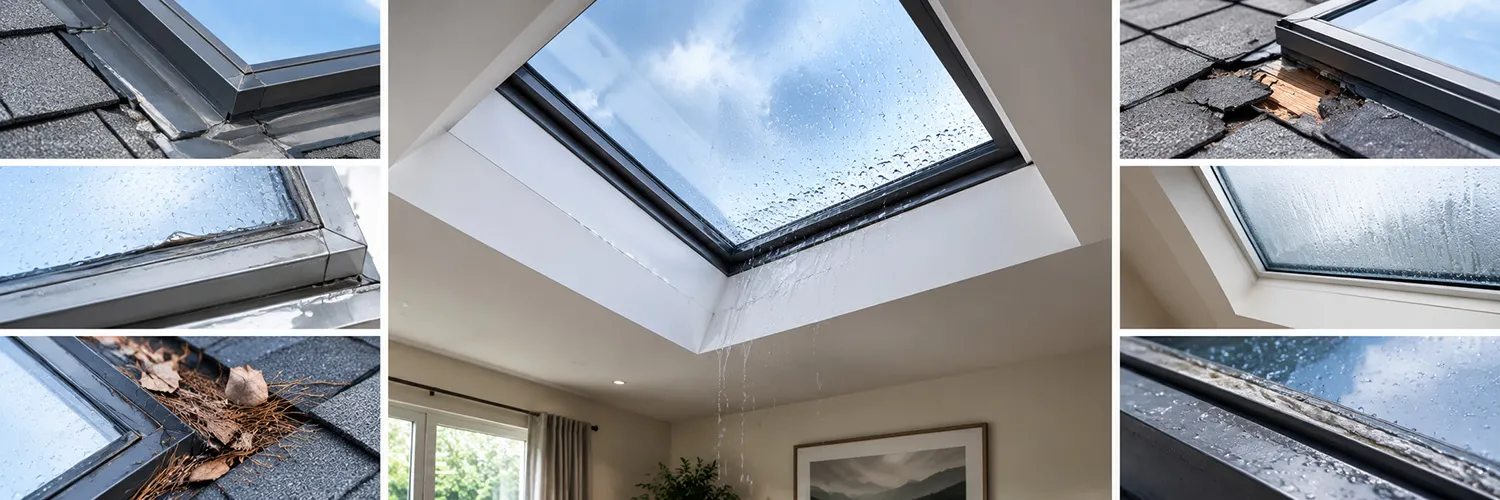
Flashing directs water away from the area where the skylight connects to the roof. During rain, water should flow over the roof and drain away without entering the structure. If the flashing is damaged, deformed, or installed incorrectly, water can get underneath the roofing materials. The problem can result from mechanical damage, corrosion, improper installation, or the use of incompatible components.
VELUX skylights use specially designed flashing systems that account for the skylight’s design and its connection to the roof. During installation, the flashing should match the specific skylight model and type of roofing material. If an inspection identifies damaged or incorrectly installed flashing, the affected components should be repaired or replaced as needed.
2. Why Can Worn-Out Sealant and Seals Cause a Leak?
Sealant closes gaps in joints and helps protect against moisture. Over time, it can become brittle, crack, or separate from the surface. Even a modern skylight is exposed to sunlight, rain, wind, and temperature changes that gradually affect its seals and sealants. Areas where different materials meet should be checked for gaps and deterioration.
When a leak is discovered, it can be tempting to simply apply a new layer of sealant over the old one. Sometimes this can temporarily hide a small, localized problem. But if water is going through damaged flashing or roofing, more sealant will not solve the underlying issue.
First, the source of the water needs to be identified to confirm whether deteriorated sealant or a damaged seal is responsible. The affected material can then be repaired or replaced using products suitable for the skylight and the connection.
3. How Can Damage to the Skylight Itself Allow Water to Enter?
Sometimes the source of the leak is the glass skylight itself. The glass can be damaged by a falling branch, hail, or another impact. The frame and other components can also sustain damage that allows water to enter.
During an inspection, check for cracks and chips in the glass, visible damage to the frame, and signs of moisture within the skylight assembly. The condition of the seals should also be assessed. Depending on the extent of the damage, the solution may involve replacing an affected component or the skylight itself.
4. Can Debris Accumulating Around a Skylight Cause a Leak?
After heavy rain, water should drain away from the skylight. When leaves, branches, and other debris accumulate around it, drainage can be disrupted. Homes located near trees are more prone to this problem. In the fall, a small pile of leaves can quickly turn into a dense, wet layer. Water remains around the skylight for longer, increasing the likelihood of it getting through damaged connections or roofing materials.
Check the area after leaves have fallen in autumn and after heavy rain, when debris may have accumulated around the skylight. Removing the buildup helps restore drainage, but any damage beneath it will still need attention. If access requires getting onto the roof, arrange for a professional to inspect and clear the area.
5. Why Can Damage to the Roof Near a Skylight Cause a Leak?
If water appears around the skylight, the problem may be in the surrounding roof. Damaged shingles, a crack in the roofing material, compromised underlayment, or a worn section near the window can allow water to enter. The roofing around a skylight ages alongside its seals and flashing, so the condition of the entire area needs to be assessed.
The inspection should cover both the skylight itself and the surrounding roof. Water can travel underneath roofing materials before reaching the interior, so a stain near the skylight does not necessarily mean that the skylight is defective. Once the source has been identified, repairs should address the damaged roofing or underlying materials.