


Skylights in Living Room: Light Design Basis
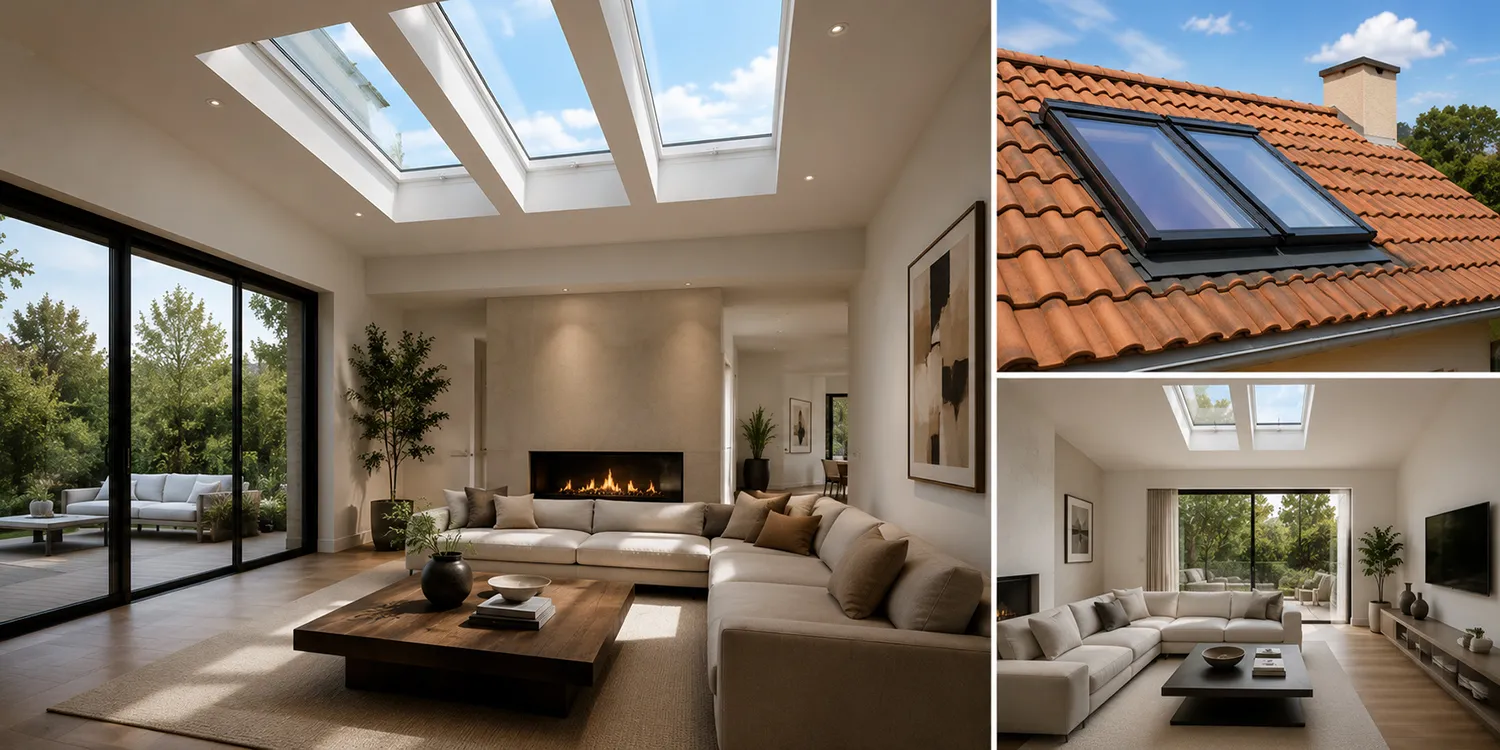
When natural overhead light enters a space through a residential skylight, the interior begins to feel more dynamic and responsive to light. That is why skylights in Southern California are increasingly seen as a key element of living room design, shaping its atmosphere throughout the day.
Light Design as the Architecture of Perception
Light design has long become a tool that shapes atmosphere and influences how space is perceived.
In the living room, this approach becomes especially expressive. Everything matters: how light is distributed, where it concentrates, how it moves across surfaces. Each ray becomes part of the composition.
As daylight shifts, the character of the room changes with it.
Skylights as a Source of Architectural Light
Glass skylights create a distinct quality of lighting. Light comes from above, gently filling the space while preserving depth along with contrast.
This type of lighting ties the interior into a unified composition, bringing together furniture, surfaces, and materials.
Architects often use modern skylights as a tool for working with light. Their placement defines the character of illumination, its intensity, and its behavior at different times of day. This makes it possible to shape space through the form of walls and the movement of light within it.
A Living Room that Changes with the Light
A living room with skylights responds to the time of day. Morning light makes it calmer and more composed. During the day, changing light brings out textures and makes architectural details more noticeable.
By evening, the interior becomes softer: tones grow warmer and shadows lengthen. Morning, afternoon, and evening light each create a different visual effect.
How Light Shapes Interior Composition
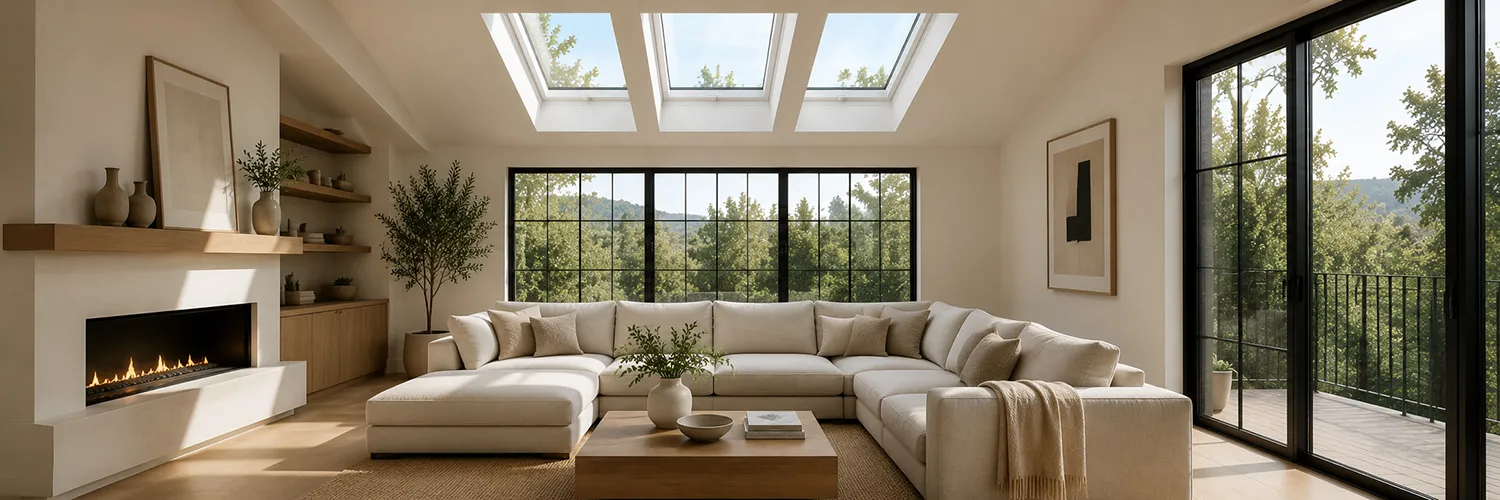
Furniture placement in a living room with VELUX skylights is organized around natural light.
Seating areas are often placed where the light is soft and even. These areas are used for relaxation and everyday seating. Sofas, armchairs, and coffee tables are typically arranged within these seating areas.
Central areas of the living room often receive more active lighting. These zones are suitable for expressive chairs, accent tables, and decorative elements. Here, light works with form, making each object part of the overall spatial composition.
Surfaces that receive more natural light visually transform. Floors, walls, and furniture gain additional depth, and textures become more pronounced.
Materials in such a space reveal themselves differently. Wood feels warmer, stone gains depth, glass adds lightness to the interior, and textiles soften the composition. Light connects these elements into a unified whole and creates a cohesive image of the living room.
Combining Daylight and Artificial Lighting
In the evening, a different lighting mode is required in the living room. Artificial lighting is arranged to support the character of the space established by daylight.
Spot sources, concealed lighting, and decorative fixtures create soft transitions and preserve the depth of the space.
Skylights are a solution that allows a living room to be filled with natural light and changes the perception of the space.