


Natural light in the corridor: Sun Tunnel possibilities
Sometimes a home corridor is designed as an afterthought, as a connecting link between rooms. A narrow passage, several doors, sometimes a mirror, and a painting. During the day, artificial light is often on here, even in regions with a sunny climate, such as Marina Del Rey or Malibu.
As a result, the corridor remains unchanged at any time of day. In the morning, during the day, and in the evening, it looks the same. This static quality makes the space visually heavier and less expressive.
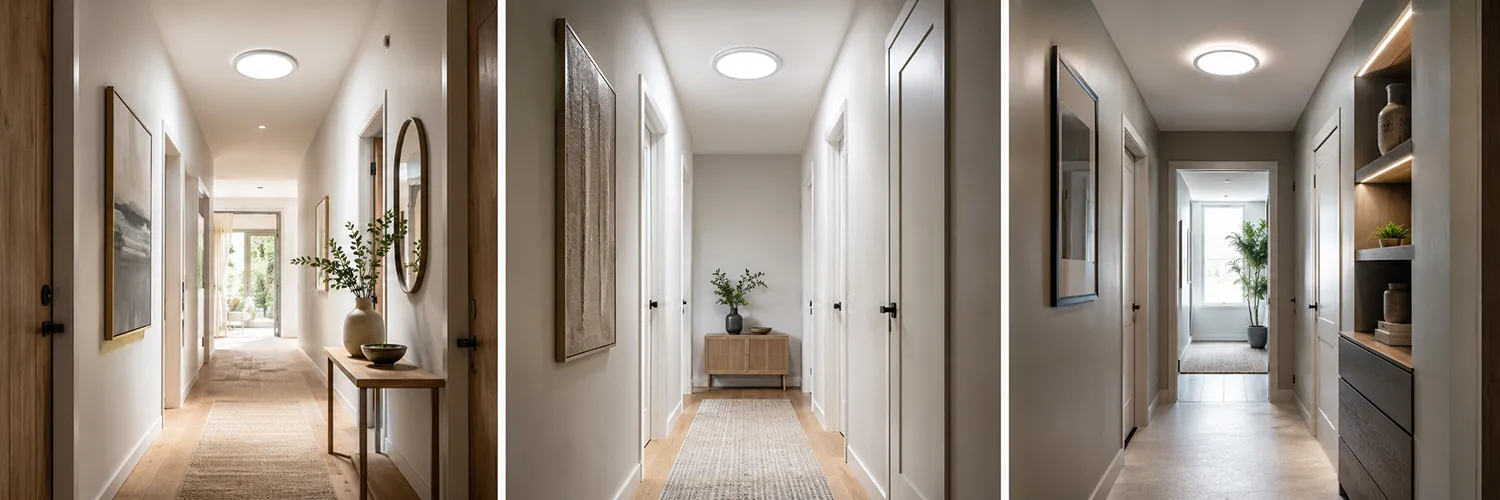
Light That Is Brought In, Not Added
The VELUX Sun Tunnel addresses a task that cannot be solved with local lighting sources. The system transfers daylight from the roof into the building. Through a dome on the roof, it enters a reflective tunnel and is then distributed into the room through a ceiling diffuser.
Despite its simple construction, precision plays a key role here. The inner surface of the tunnel almost fully reflects the light, preserving its intensity along the entire path.
As a result, the space receives even daylight illumination, perceived as naturally as light from a window.
Two Engineering Solutions That Define the Character of Light
The VELUX Sun Tunnel line includes two types of construction, a rigid and a flexible tunnel.
The rigid option is used where a direct path from the roof to the ceiling is possible. It creates a more concentrated and directional light flow.
The flexible tunnel is used in cases where a straight line is not possible. It can be routed around structural obstacles while continuing to deliver natural daylight.
The choice between them depends on the layout of the house, the roof structure, and the characteristics of the ceilings. A Sun Tunnel is most often considered a point solution for a specific space.
When a Sun Tunnel is Appropriate
There are homes where corridors receive natural light through glass doors or partial partitions. However, in most layouts, central areas remain isolated.
- A Sun Tunnel is appropriate in cases when:
- the corridor is located inside the building and has no windows
- daylight hardly enters during the day
- the space is used regularly
- there is a need to reduce dependence on artificial lighting during the day.
How the Space Changes after Installation
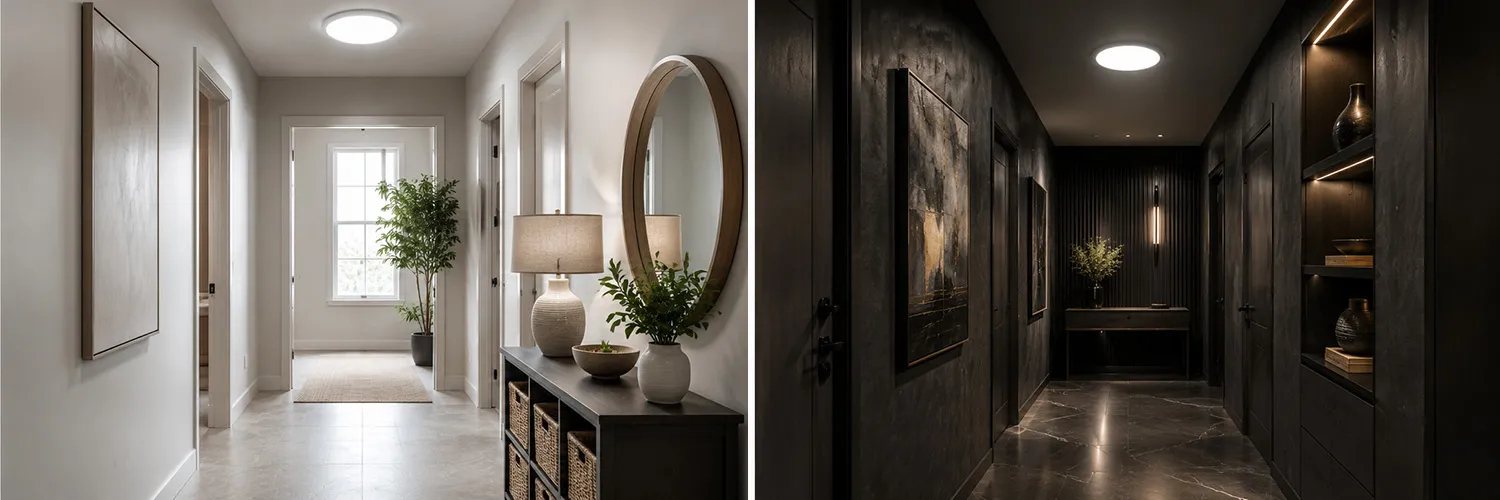
After installing a Sun Tunnel, the corridor changes throughout the day. Light from above sets a vertical direction and visually increases the height of the space. The space becomes brighter and is perceived as more open, and moving through it is more comfortable and natural.
Installation without Major Renovation
VELUX sun tunnel installation is carried out through the roof and usually takes a few hours with a pre-determined installation point.
The key stage is choosing the point on the roof. It determines the amount and character of incoming light. Then a channel is formed through the attic space or ceilings, after which a ceiling diffuser is installed inside the room.
During installation, the geometry of the building, the distance to the roof, and the characteristics of the ceilings are taken into account, which can affect the routing of the channel. Therefore, the solution is always selected for a specific space.
Sun Tunnel in a corridor solves one of the most common layout challenges, the lack of natural light in central areas of the home. In such cases, this solution should be considered already at the design stage or when updating the space.