


7 Reasons to Install a Sun Tunnel That Are Often Overlooked
When it comes to a VELUX Sun Tunnel, the conversation usually centers on bringing more natural light into the home. But there can be many other reasons to install one if your home has areas that stay dark because of their layout or location.
In this article, we will look at 7 reasons for installing a Sun Tunnel and explore situations where it can be useful.
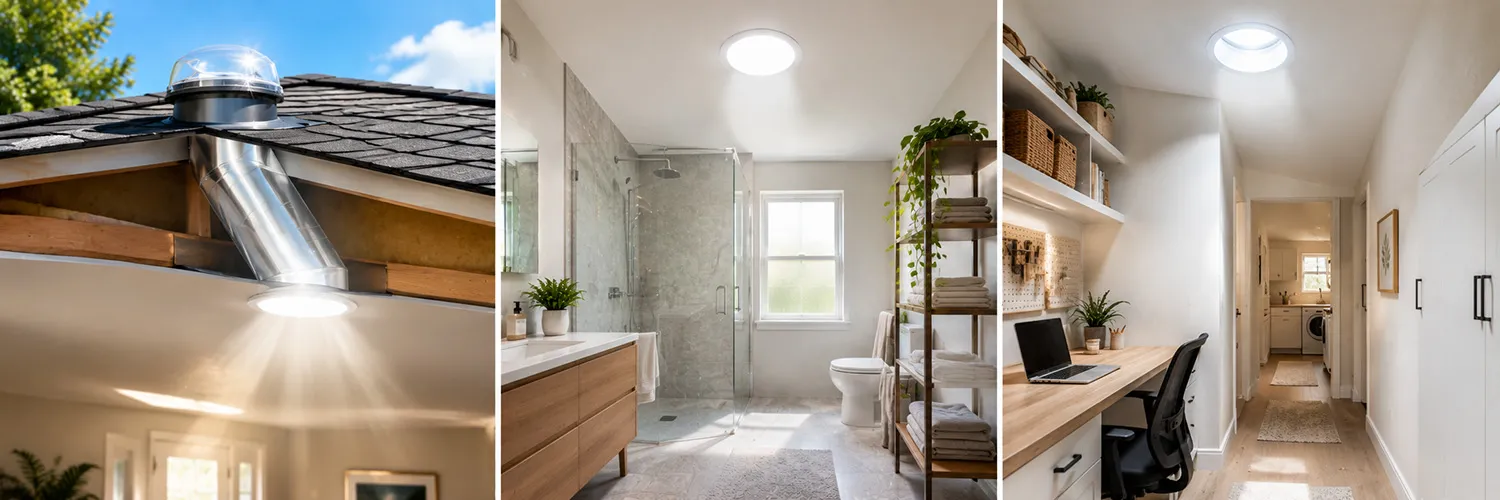
1. Natural Light Where It Is Usually Lacking
Some rooms simply have an inconvenient location. They may not have a window, sit deep inside the home, or be separated from an exterior wall by other rooms. As a result, you may need to turn on the lights during the day, even when it is sunny outside.
Take a walk-in closet, for example. It can be fully functional during the day, but without natural light, clothing colors can look different, and finding the right item on a shelf can be more difficult. A similar situation can occur in hallways, stairways, storage rooms, and some bathrooms.
A Sun Tunnel brings daylight in from the roof through a specially designed light tunnel. This makes it possible to add natural light to an area that was originally designed without a window. Sometimes, that alone is enough to make a room feel less closed in and more open.
2. More Daylight without Privacy Concerns
A large window in a bathroom sounds appealing until you must think about neighboring homes, curtains, and blinds.
Privacy matters in spaces where you want to feel comfortable without worrying about who might be outside. That is why some homeowners intentionally limit the size of their windows or choose not to have them at all.
With a Sun Tunnel, daylight enters from above, so there is no conventional window providing a direct view into the room. For a bathroom, bedroom, or first-floor room next to a neighboring home, this can be a significant advantage.
3. Make Dark Areas of the Home More Pleasant for Everyday Use
A dark hallway, staircase, walk-in closet, laundry room, or storage room may serve its purpose, but using it is not always pleasant. You walk in and automatically turn on the light.
The difference is noticeable in spaces that you only enter for a few minutes but use many times throughout the day. These are exactly the areas that are often overlooked during renovation. People rarely think of a hallway or staircase as a space that needs its own source of daylight. Yet we use these spaces every day to move around the house, find things, or carry items between floors.
A Sun Tunnel lets you add light through the ceiling without changing the existing layout. For small and transitional spaces, this can be one of the most practical ways to bring daylight into areas that previously had very little.
4. You Do Not Have to Design the Interior around a New Window
Installing a conventional window requires taking quite a few details into account. Where will the opening go? Where will the cabinet go? Will there be enough room for shelves? Will you need curtains or blinds?
A Sun Tunnel works differently. The source of daylight is in the ceiling, so the walls remain available for furniture, storage, and decor. In some cases, a rigid Sun Tunnel can be used in spaces where a straight light channel can be installed between the roof and the ceiling.
It is useful in small rooms where every inch matters. For example, in a compact bathroom, a wall may be needed for a mirror and cabinet. In a walk-in closet, it may be needed for storage systems. In a narrow hallway, it may be needed for furniture or wall decor.
5. Using a Sun Tunnel When the Layout of the Home Changes
Sometimes, a lighting problem appears years later. For example, a home office is added. A large room is divided into two. Part of the space is converted into a walk-in closet or an additional bedroom. The purpose of the room changes, and suddenly you realize that there is almost no natural light.
When the home was originally designed, this space may have been part of a room with a window. After the renovation, the situation becomes completely different.
In such cases, a Sun Tunnel makes it possible to add light where it is no longer sufficient after the renovation. For spaces with complex layouts, a flexible Sun Tunnel can route the light channel around the specific features of the space.
6. Sun Tunnel for Small and Utility Spaces
Most people carefully plan their living room, kitchen, and bedroom, while the storage room or laundry room often gets considered at the very end. Windows are often not included in the layout of these spaces at all. As a result, the room remains functional in terms of size and purpose, but without natural light. In this case, a Sun Tunnel makes it possible to add daylight without a major renovation.
7. You Can Use the Roof as a Source of Light
When we think about natural lighting, we usually think about windows in the walls. The roof is much less likely to come to mind.
A Sun Tunnel lets you use another surface for lighting, the roof. Light enters through the roof and is directed into the room through the light tunnel. Rigid Sun Tunnels and flexible Sun Tunnels are available for these types of applications. This option is particularly useful for homes with complex layouts, where a room is located far from an exterior wall.
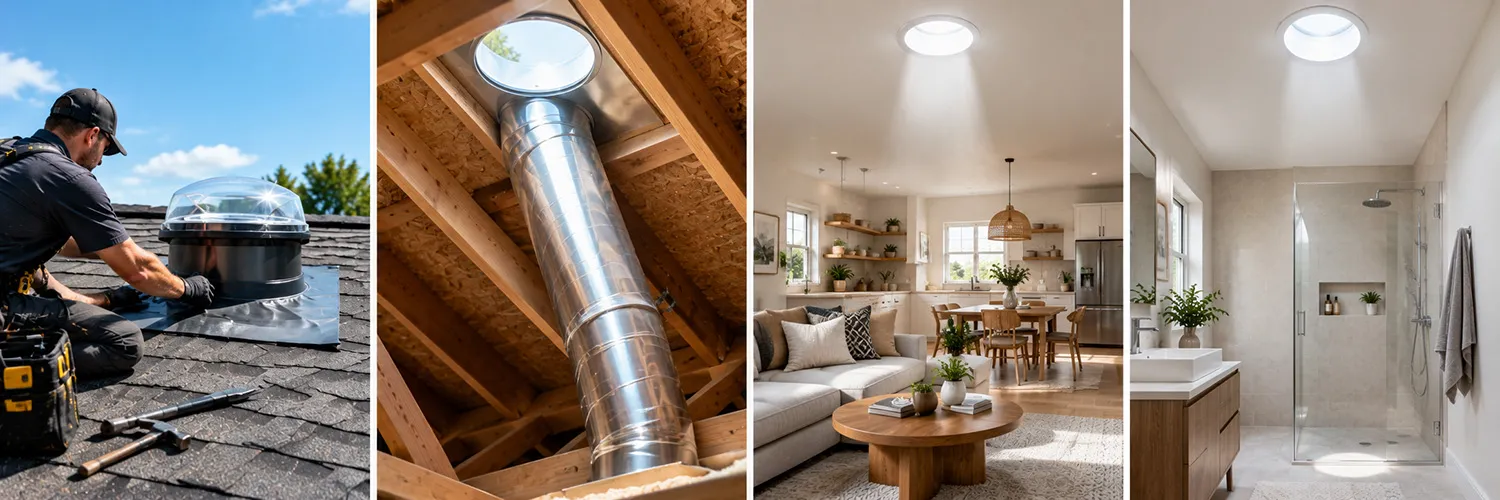
Is a Sun Tunnel Worth Installing?
Every home has its own characteristics, so there is no universal answer. Much depends on the location of the room, the roof structure, the available space, and how much natural light the space is lacking.
But if your home has a room where sunlight barely reaches, it is worth considering a Sun Tunnel when a conventional window does not work with the layout, interior, or privacy requirements. If you live in Southern California, you can choose a suitable solution based on the specific characteristics of your home and roof.