


7 Mistakes in Skylight Care That Shorten Its Lifespan
A skylight can fill a room with natural light for years while barely reminding you that it is there. That is exactly why homeowners can easily overlook its maintenance. If the window is high above your head, it is easy to think about it only when a damp spot appears on the ceiling.
A skylight is constantly exposed to sunlight, rain, temperature changes, and wind. Leaves and other debris accumulate on the roof, seals around the frame gradually age, and the condition of the flashing directly affects protection against water. Regular maintenance helps you spot changes before they turn into major repairs.
Let us look at seven common mistakes that shorten the lifespan of a skylight and can lead to completely unnecessary expenses.
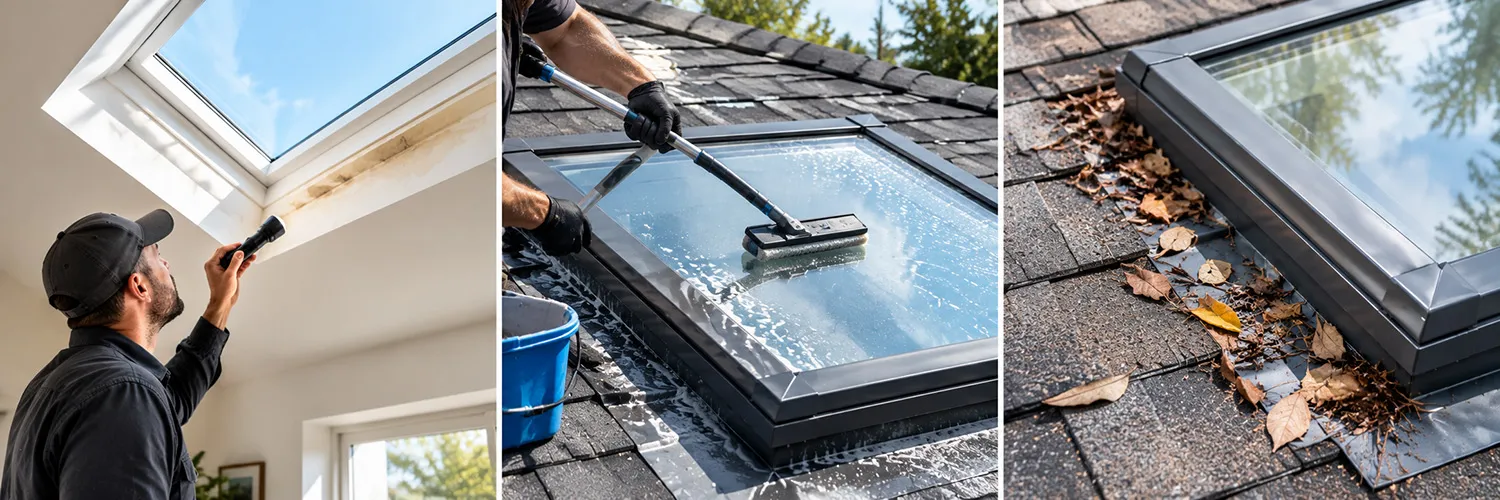
1. Neglecting Regular Skylight Inspections
Skylights have one unpleasant characteristic: many problems remain unnoticed for a long time.
A small, damaged seal does not necessarily cause water to drip right away. A weakened section of flashing may also remain watertight for some time.
A skylight should be included in your regular seasonal home maintenance. Carefully inspect the glass and frame from inside the room. Are there any signs of moisture? Have stains appeared on the ceiling or around the window opening? Does the sealant look cracked or worn? Is there an unusual amount of condensation forming inside?
Important: inspecting the roof from the outside requires caution. If checking the skylight requires getting onto the roof, it is safer to have the work done by a professional skylight installer.
2. Using the Wrong Products to Clean a Skylight
Abrasive cleaners and rough sponges can leave scratches on the glass surface. Some chemical products can damage the frame finish or individual skylight components.
For routine cleaning, a soft cloth or sponge and a cleaner suitable for glass are sufficient. First remove dust and small debris, then gently clean the surface. Do not try to scrape off dried dirt with metal objects or other hard tools.
3. Ignoring the First Signs of a Leak
If you notice moisture, a yellowish stain, peeling paint, or water marks near a glass skylight, do not put off having it inspected, even if everything looks completely normal for several weeks afterward.
Water can enter the structure gradually. The source of the leak may be near the flashing, at the point where the skylight meets the roof, in the seals, or somewhere else on the roof, from where water gradually travels toward the window opening.
Another common mistake is applying a new layer of sealant over the old one without identifying the cause of the problem. Sometimes this really does hide the problem temporarily. However, the damaged component continues to let water through.
4. Failing to Monitor the Condition of the Roof Flashing Around the Skylight
The skylight and the roof work as a single system. The area where they meet requires special attention. This is where the structure must reliably protect the home from rainwater.
Over time, the roof flashing around a skylight can become damaged, deformed, or gradually worn out. Problems can also occur when leaves, branches, and other debris accumulate around the window or when a previous repair was done improperly.
The challenge with this type of damage is that the source of the leak is not always where the water first becomes visible. Moisture can enter the structure in one place and appear later as a stain inside the home. Even a routine inspection of the room can provide useful clues: recurring signs of moisture, stains around the window opening, leaks after rain, or problems that occur only when the wind comes from a certain direction.
5. Mistaking Condensation for a Leak
Water droplets on a skylight can quickly cause concern. But moisture on the glass surface can also form because of condensation.
When warm, humid indoor air meets a colder surface, droplets form on it. This situation is more common in areas with higher humidity, such as bathrooms, kitchens, or poorly ventilated spaces.
If condensation regularly forms in the morning, after a shower, or at a certain temperature, the cause may be related to indoor humidity and ventilation. Regular ventilation, a functioning exhaust system, and humidity control can help reduce the amount of moisture on the glass.
If water appears regardless of indoor humidity or occurs specifically after rain, especially in the same spot, the skylight and the surrounding section of the roof should be inspected.
6. Leaving Leaves and Debris Around the Skylight
Depending on the season and the surrounding vegetation, leaves, small branches, and other debris can accumulate around a skylight. The problem begins when all of this is left there for weeks.
Organic debris holds moisture, while access to some areas of the structure becomes more difficult. Over time, a constant buildup of dirt and moisture can create conditions that damage materials and lead to leaks.

7. Considering Professional Maintenance an Unnecessary Expense
The most expensive mistake in maintaining a modern skylight often starts with a perfectly understandable thought: “If nothing is leaking, everything must be fine.” But the roof and window can gradually wear out even when there are still no visible signs of a problem inside the home.
A professional inspection makes it possible to check areas that are difficult to assess from inside the room: the roof flashing, the points where the window meets the roof, signs of wear, potential areas where water can enter, and the condition of the roofing materials around the window.
The main rule of skylight care is not to wait for a major problem. A ceiling stain, water marks, damaged sealant, or debris that has accumulated around the skylight may seem like minor issues. But these are often the first signs that indicate the skylight should be inspected. The sooner a problem is identified, the more opportunities there are to address it without major repairs.