


6 Reasons to Replace an Old Skylight
As long as a skylight brings in natural light and does not cause any obvious problems, it may seem too early to replace it. But signs of wear can develop over time, sealing can deteriorate, the glazing may no longer provide the same level of comfort, and some features may begin to work less effectively.
According to VELUX, the average lifespan of a skylight is about 20 years, although some models can remain fully functional for 30 years or more. Therefore, age alone is not a reason to replace a skylight immediately. What matters more is its actual condition and how well it continues to perform its intended function.
In some cases, a replacement skylight can be a sensible solution, especially when an older model no longer provides adequate protection from the elements or is difficult to operate.
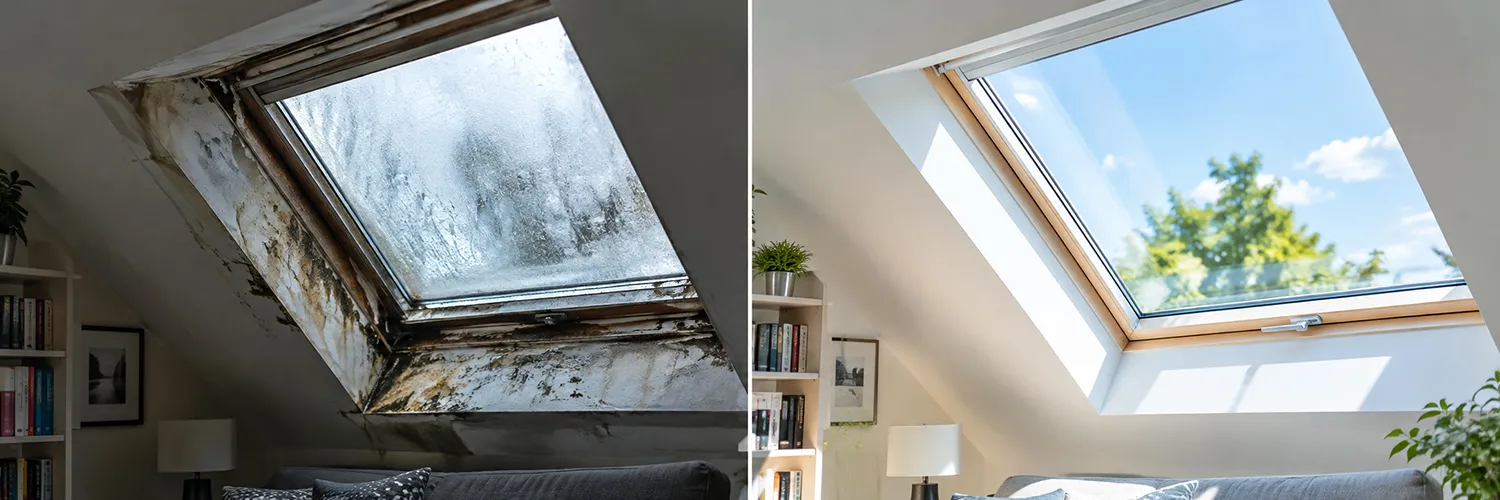
1. The Skylight Has Started to Leak
A leak is one of the most noticeable signs that there is a problem with an old skylight. Sometimes water appears only during heavy rain. The cause may not be the window itself. The connection between the skylight and the roof, including the flashing and underlayment, also plays an important role. If the sealing or connection components have deteriorated, a temporary repair may solve the problem only for a limited time.
At the same time, a leak does not necessarily mean that the skylight must be replaced. First, it is important to identify the source of the problem and determine whether the roof connection can be reliably restored. If the problem is related to the condition or watertightness of the window itself, or if repairs no longer provide a long-term solution, replacement becomes a more reasonable option.
When a skylight is replaced, new flashing and underlayment are installed to match the specific type and slope of the roof. VELUX offers different flashing systems for shingles, tile, metal roofing, and other roofing materials. Their purpose is to direct water away from the skylight and provide a reliable connection between the window and the roof.
2. The Old Glazing No Longer Provides the Same Level of Energy Efficiency
A skylight brings plenty of natural light into the home. At the same time, it can allow solar heat to enter, which makes glazing characteristics important for indoor comfort.
The glass performance of older windows may differ from that of modern solutions. New VELUX skylights are available with different glazing options that help manage daylight and solar heat. For example, VELUX offers Clean, Quiet & Safe glass with LoE³ coating, designed to combine natural light with solar heat control.
If a room heats up quickly during the summer, the type of glazing and the option to install a shade deserve particular attention when replacing the skylight.
VELUX offers solar-powered shades that help control the amount of light, reduce glare, and limit excess solar heat.
3. Condensation, Cloudiness, or Other Signs of Wear Appear on the Glass
Fogged glass does not always mean that a skylight needs to be replaced. For example, condensation on the surface of the glass can occur because of increased indoor humidity. This is especially common in bathrooms.
Another situation occurs when moisture or cloudiness appears between the panes of glass. This can indicate a problem with the seal between the panes. Damaged glass, persistent cloudiness, or other signs of glazing deterioration require a closer evaluation and, in the case of an older skylight, may be a reason to consider replacement.
4. The Skylight No Longer Opens Properly
If a venting model becomes difficult to open or close, the mechanism operates inconsistently, or ventilation is no longer being used because of the inconvenience, it is worth determining the cause.
Modern VELUX venting skylights are available in manual, electric, and solar-powered versions. For example, Solar-Powered Fresh Air Skylights feature a solar panel and battery and include a rain sensor that automatically closes the skylight when it rains.
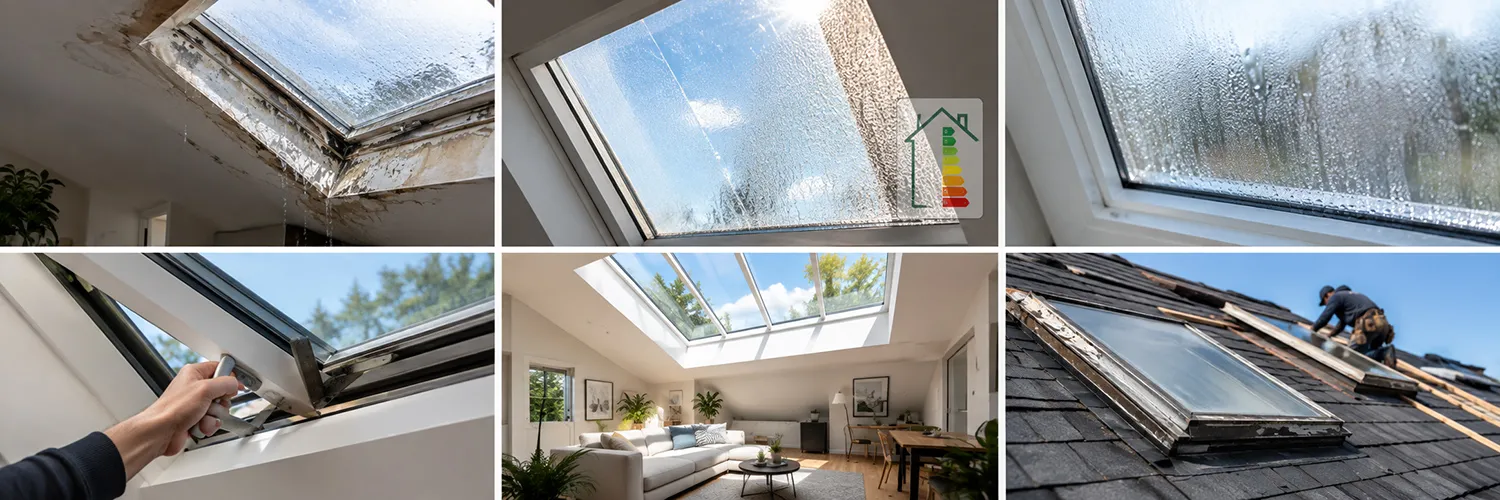
5. The Old Skylight No Longer Meets the Needs of the Room
Sometimes an old window is physically in good condition. It does not leak, the glass is intact, and the mechanism works. But over time, the needs of the room may change. For example, natural light may have been sufficient before, but ventilation may now be important, or manual operation may have become inconvenient because of the skylight’s location.
When replacing a skylight, you can choose a model that better meets your current needs: a fixed skylight if natural light is the priority, or a venting model if additional ventilation is important. If needed, you can add a shade and choose the appropriate control method.
6. The Skylight Is Already Old and the Roof Is Being Prepared for Replacement
There is another important factor to consider: the condition of the roof itself. VELUX recommends considering skylight replacement at the same time as reroofing. This makes it possible to install a new window and new flashing while work is being done on the roof, rather than returning to the same area separately later.
If your skylight already requires constant attention, you do not have to wait for a serious problem. We can assess the condition of the window and the roof connection, discuss replacement skylight options, and help you choose a solution that is right for your home.